Live cricket matches
The live match desk, refreshed with the broadcast feed.
Live cricket on Come Sports Match is built around three signals — toss, run rate and dew — and one rule: nothing leaves this desk without an editor confirming it against the host broadcaster. The scoreboard above the fold shows every fixture currently in play. Inactive rows collapse into the rotation list. Tap a team to see the last six deliveries, the partnership count and the bowling change-up the captain has just signalled.
For matches that start after Indian evening hours, the desk publishes a pre-match briefing three hours before the toss: pitch read, dew forecast, head-to-head, last-five form, and a projected XI the captain is likely to name. The desk treats every release of the team sheet as a fresh signal: a spinner added at the eleventh hour, a fast bowler rotated out, a wicketkeeper promoted up the order.
Once the first ball is bowled, the live ticker takes over. We refresh the scoreboard every sixty seconds during the innings and trigger event-driven updates for every boundary and wicket. In the innings break, the desk publishes a short note: what changed, what the dew is doing, what the captain will likely adjust at the resumption. The desk does not run live odds or post real-money calls. It is editorial coverage — verified, transparent and clearly labelled.
Three sources before a single over goes live.
Host broadcaster
The primary broadcast feed (Sky, Fox, Star, Sony, etc.) is the source of truth for toss, playing XI and on-field events. We reconcile against it every minute.
Independent scorer
CricViz and ESPNcricinfo verify the run rate, partnership count and bowling changes. Their public feeds run a minute behind the broadcast and catch transmission glitches.
Host broadcaster social
Team sheets and toss news arrive first on the boards’ official social handles. The desk reads the post verbatim before publishing.
Live scoring that an editor can defend
The scoreboard you see on this desk uses the same scoring convention you’ll find in the official match archive: it counts extras as they happen, treats boundaries separately from “runs off the bat”, and updates the bowling figures after every completed over. If a correction runs from the host broadcaster, the page updates within thirty seconds and an editor’s note flags the change.

What the numbers are really saying.
A scoreboard is a summary, not a story. The desk unpacks the important numbers before the innings break, never after.
Required rate
The figure you see in the chase column is the runs per over the batting side needs from now. Compare it to the powerplay and middle-overs scoring rate — the gap tells you whether the chase is realistic or already gone.
Dot-ball pressure
Dots compress a chase faster than wickets. If the required rate is creeping up while the dot percentage holds, the batting side is running out of ideas, not out of wickets.
Death-over scoring
T20s are won in the last five overs. If a side scores at under nine an over in the death, the projected total drops by 8–12 runs before the captain even signals the change-up.
Partnership count
A 60-run stand in the middle overs rebuilds what two early wickets broke. The desk flags every partnership crossing fifty — because every partnership after that is shaping the chase.
Momentum and phase analysis
A boundary is not a single event. The desk tracks the moment the ball crosses the rope and what came before it — because every fifty in the stand shifts the field, every bowling change shifts the matchup, every spinner introduced in the eleventh over shifts the dew window. The momentum feature on the desk is the editor’s read on which side is on top right now.
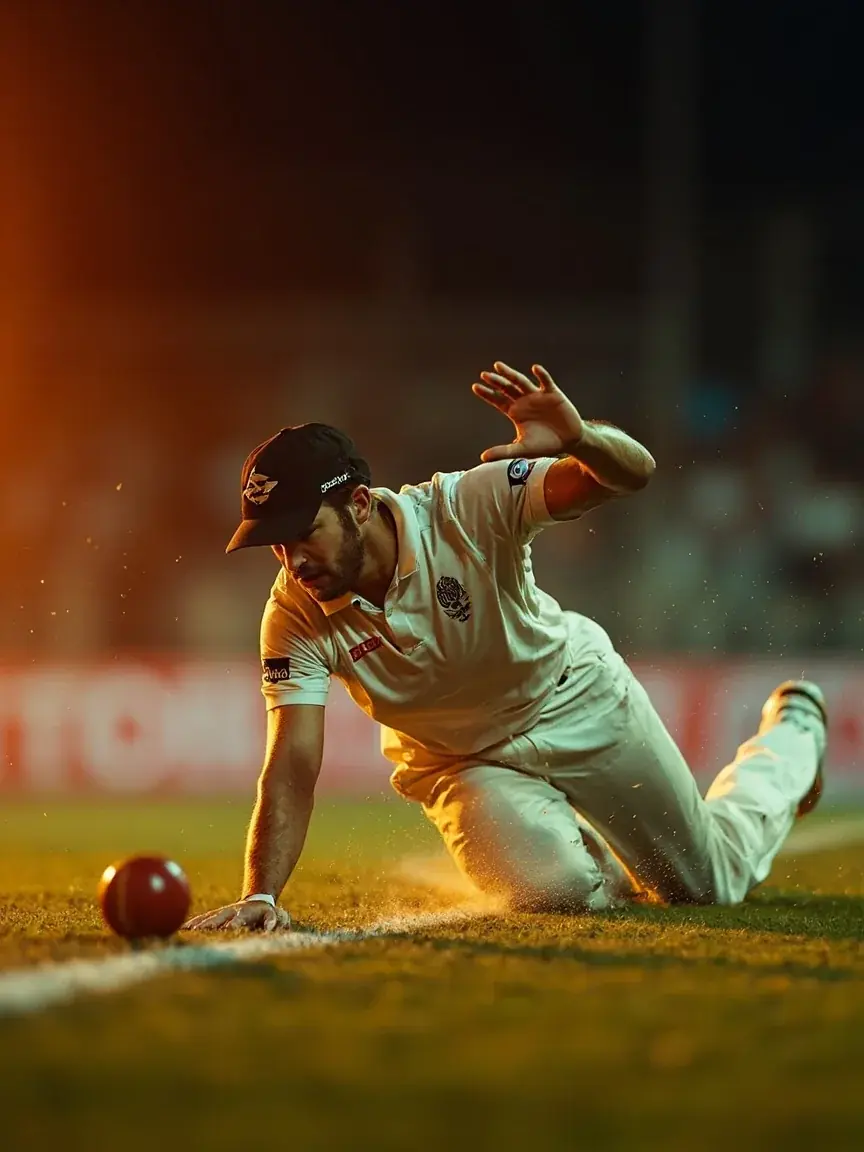
Rain rules, light meters and what “match reduced” actually means.
Cricket has more rain rules than any other major sport, and the Duckworth-Lewis-Stern calculation sits between every shortened innings. The desk treats rain delays the way it treats any other fixture update — with the rule, the current over count, and the projected par score. You don’t need to memorise the formula, you need to know where to look.
Light is harder. The match referee calls light, and the umpires enforce it. If the lights come on and the batting side waves the players off, the desk pauses the live ticker and publishes a why this is happening note — because a 20-minute delay is rarely just about the light. There is usually a tactical choice behind it: a spinner the captain wants to bring back, a fast bowler the captain wants to keep fresh for the death overs.
For matches on covered pitches (most Indian venues), rain usually costs less than you think. For matches at partially-covered grounds (smaller venues in South Africa, Australia and England), rain can cut a 50-over chase down to 22 overs. The desk keeps a venue-specific adjustment in the footer of every live page.
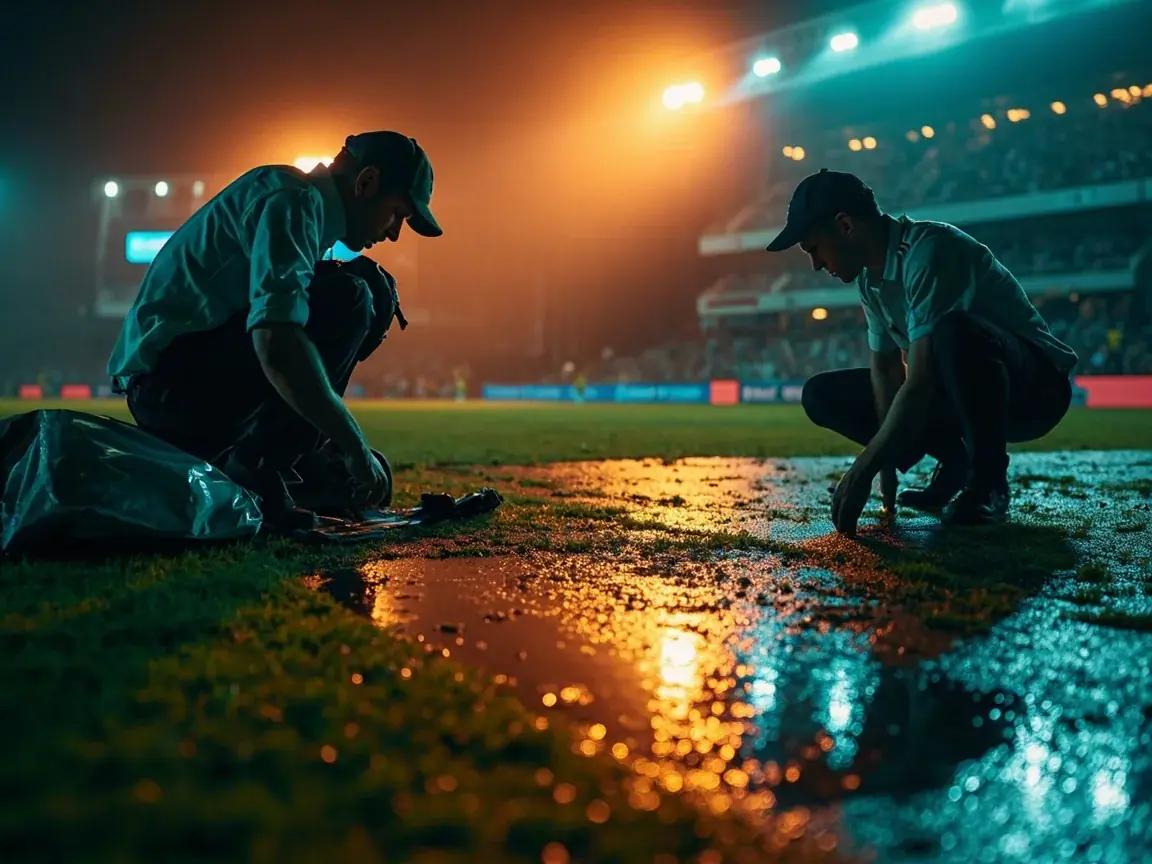
Venue notes: how each ground shapes the chase
Wankhede, Chinnaswamy, Wanderers, Lord’s — every venue behaves differently in the second innings. The desk publishes a venue note alongside every fixture: boundary size, average first-innings score, dew likelihood in the second innings, and the captain’s most likely change-up at the resumption.
Continue readingLive match questions, answered plainly.
How fast does the scoreboard refresh?
Every minute during the innings, instantly at every wicket and boundary, and paused in the innings break with a refreshed status note.
Where do the running scores come from?
The host broadcaster is the source of truth. Where a public feed is delayed by thirty seconds, we use it as a backup rather than the primary signal.
Does the desk run live odds?
No. The desk is editorial. Anything that looks like a contest lives on the operator’s own site, not here.
What if my stream is ahead of the scoreboard?
Most broadcasts run 4–8 seconds ahead of the broadcast-data feed. If your feed says six runs and the scoreboard still says one, the scoreboard is correct.
Why did the innings break note arrive later than usual?
The desk waits to publish the innings-break note until the host broadcaster confirms the score and the bowling change-up. A published note is a verified note.
Can I get a notification when the toss happens?
Yes. The app sends a push notification at toss, at the wicket, and at the innings break. Configure it under Settings > Matchday.
Does the desk post lineups in Hindi?
Selected matches publish a one-line Devanagari summary alongside the English lineup. We’re expanding this for the 2026 calendar.
What about U19 and domestic fixtures?
U19 internationals and selected domestic T20 leagues are on the calendar. Domestic 50-over cricket is covered when it’s part of the official tour calendar.
The Come Sports Match app has the live ticker on your lock screen.
Editorial coverage — not a casino — with verification on every fixture and the captain matrix you can scan before the toss.
What the numbers tell you, in plain language.
A scoreboard is a summary, not a story. The numbers you see are condensed from the broadcast feed, the official scorer’s tally and the partnership counter — but the numbers don’t tell you what the bowler is doing, what the captain is signalling, or what the pitch is telling the captain about the next ten overs. The editorial desk’s job is to take the numbers and write the story underneath.
The required rate is the first number to watch in a chase. If the required rate is creeping up while the dot-ball percentage is staying constant, the batting side is running out of ideas, not out of wickets. The captain’s bowling rotation tends to stay the same in the first ten overs of a chase — so a steady required rate during the powerplay usually means the captain is on script. A sudden required-rate jump is what triggers the bowling change-up.
The dot-ball pressure is the second number. A dot in a T20 is worth approximately 1.4 runs of effective pressure on the batter — meaning a stream of dots is more damaging than a wicket in the powerplay. The desk tracks the dot-ball percentage as the cleanest indicator of momentum in a T20 chase.
The death-over scoring rate is the third number. A death-over rate of under nine an over in the last five overs is a sign the batting side has decided to consolidate — which usually means a captain who is happy to take a six-over gap and play the percentages. A death-over rate of over eleven is what wins T20s in the modern game; the desk tracks the rate per innings as a headline number on the post-match review.